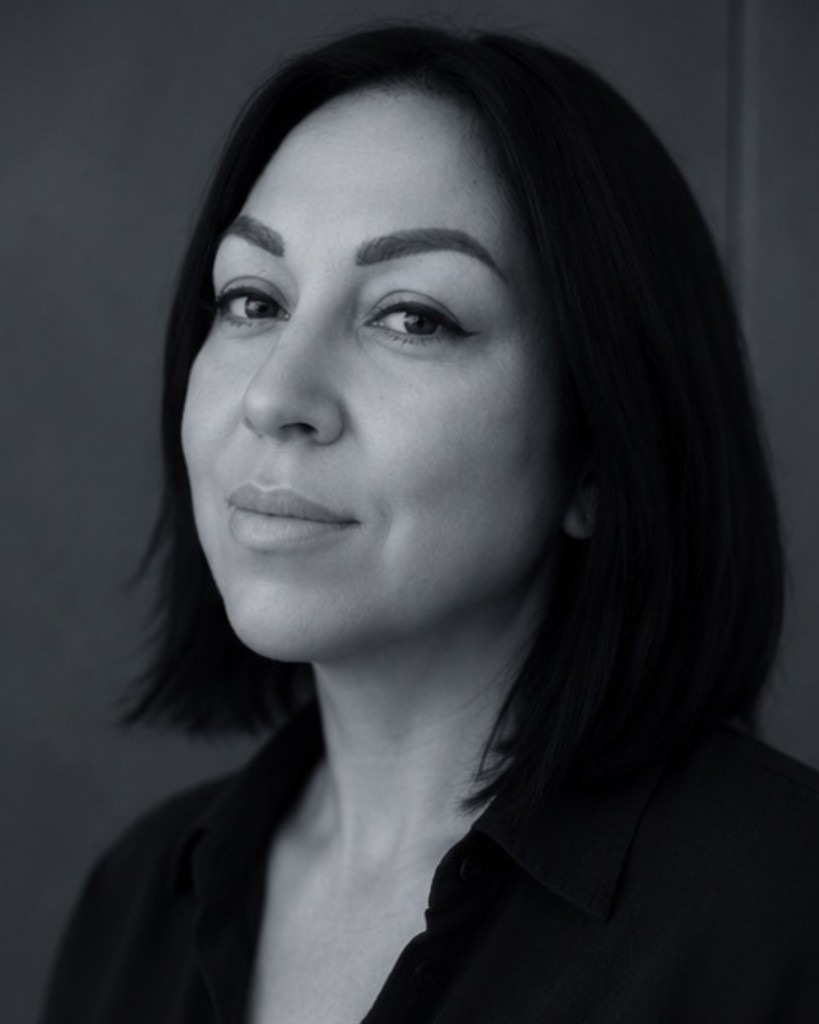
Music has been part of my life for as long as I can remember. I wrote songs, trained in a recording studio, performed, and won music competitions. After winning Karaoke on the Maidan, I had the opportunity to pursue a professional career in music.
But at that time, I chose a different path. I started a family, became the mother of three children, and devoted many years entirely to my family and entrepreneurship.
Years later, I realized that some dreams never disappear. They simply wait patiently for their time.
When I decided to return to creative work, I didn’t pursue a solo career. Instead, I founded the NOTAGAMA creative center. Perhaps because I have always been interested in creating opportunities not only for myself, but for others as well.
Adults came to this center who had once dreamed of singing, performing, writing music, working in a recording studio, or creating their own projects, but for various reasons had never taken that step. Here, those long-postponed dreams gradually became reality.
At the same time, my own dream was becoming reality as well. I returned to writing music, working in the studio, and creating stage productions and musicals. The project never became nationally known, but it became an important part of my city’s cultural life.
That was when a new dream came to me—to write music for films.
I began looking for my way into the film industry. I spoke with people, searched for opportunities, and tried to break into the profession. Some told me it was already too late to start. One company gave me a test assignment, highly praised the result, and offered to work with me.
But at that very moment, everything began to change rapidly. Artificial intelligence entered the industry. The company that had been ready to work with me as a composer switched to AI tools.
At first, of course, I was disappointed. But then I made a decision: if artificial intelligence had changed the path I planned to take into filmmaking, I would use its capabilities to create my own films and write the music for them.
That is how the idea for my first series, The Silence of the Birds, was born.
As I began working on it, I quickly realized that the existing AI tools were not connected into a unified production workflow capable of creating a full episodic project.
That is how the idea for the NOTAGAMA AI platform was born.
By that time, I had already successfully built my own technology product. I developed and launched LifeOctave, a platform for self-discovery and personal development that combines a website with mobile apps for the App Store and Google Play.
While building LifeOctave, I unexpectedly discovered that what truly fascinated me was the process of creating technology itself. To me, it felt remarkably similar to composing music: first an idea is born, then a structure begins to take shape, dozens of individual elements gradually come together, and at some point everything starts working as a single whole.
The emergence of artificial intelligence opened entirely new possibilities. It made it possible for one person to build projects of a scale that, until recently, only large teams could build.
That is why NOTAGAMA became, for me, not just another idea, but my next—and far more ambitious—technology project.